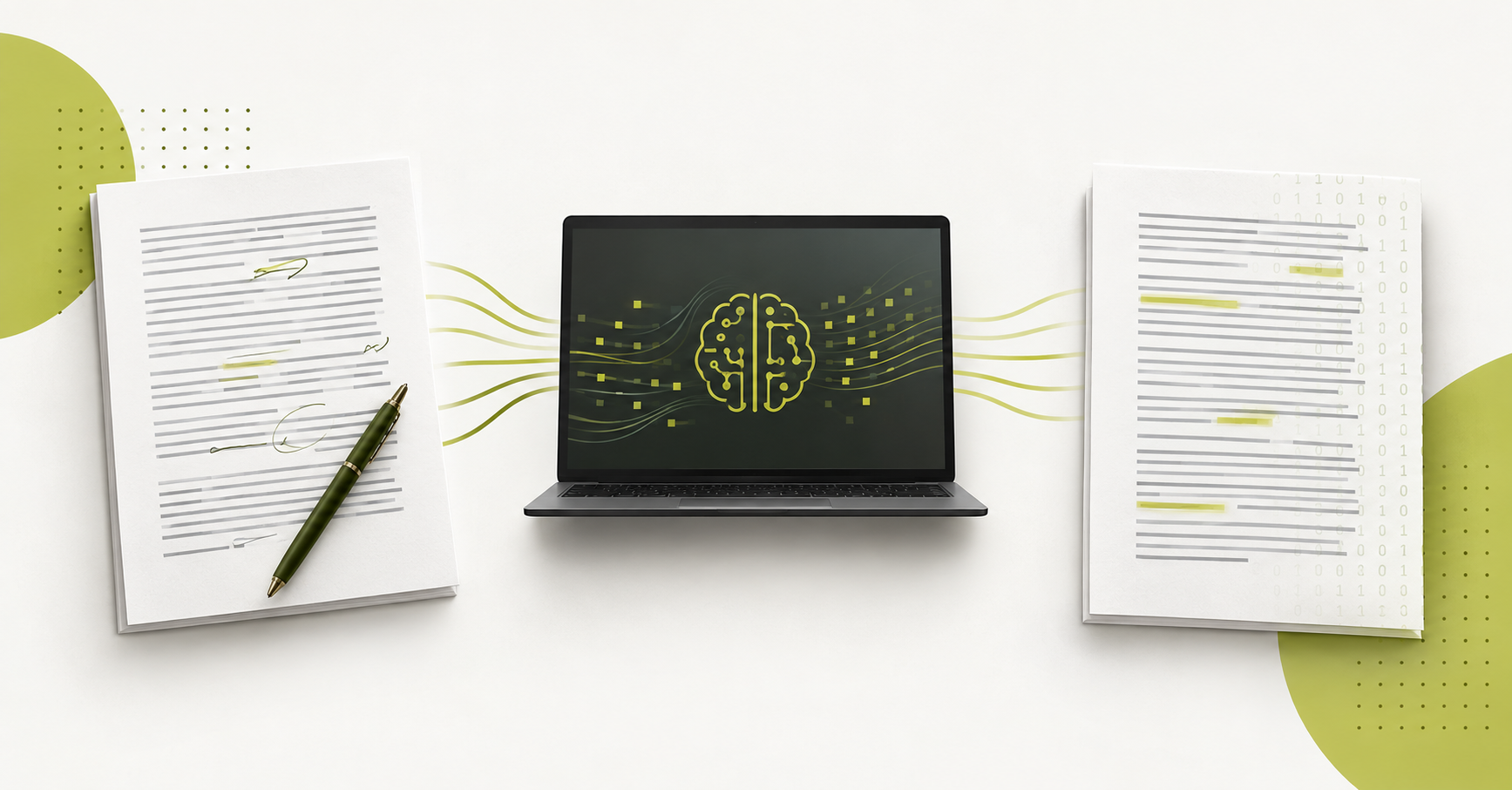
AI editing has long been recognised by academics and journal editors as a legitimate way of editing text that is human generated. Publications thus edited found their way into academic journals in the understanding that only AI-editing took place and not AI-generation of text. Recent developments regarding the watermarking of AI-processed text could lead to the unintended consequence that text processed in this way can afterwards be identified as AI-generated text. Users of conversational AI systems for AI editing should therefore be cautious until more detail is forthcoming.
Conversational AI systems (‘chatbots’) are often used for AI editing, both by academics themselves and by some professional text editors. Such editing could include light editing such as the correction of grammatical errors or even more substantial editing such as tightening of the text, moving paragraphs or rephrasing arguments. In most cases, scholarly journals do not require AI editing to be disclosed, as is required for AI-generated text.
In order to be compliant with the EU AI Act, Anthropic has recently introduced watermarking of text processed by Claude on new models released after 2 August 2026, applicable not only within the EU jurisdiction areas but worldwide. Older models that were released before 2 August will be retrofitted with watermarking during the next few months. Since the watermarking is effected during the stage of processing, such watermarking will evidently only apply to new text processed. Anthropic did not indicate when the earlier models of Claude will be retrofitted; it can happen any time.
In principle, users should welcome a way of identifying AI-generated text from human-produced text, e.g. editors of scholarly journals or academics requiring essays from students. The problem is that the watermark indicates processing of the text by Claude and does not distinguish between production of the text and some levels of editing. Human-produced text undergoing AI editing might introduce watermarking. Light editing might not introduce watermarking, but heavy editing might. Conversely, when it is attempted to conceal AI-generated text by subsequent editing, the watermark might survive some editing, but at this stage it is currently unclear which level of editing.
On 2 September, Anthropic released further information on how Claude will mark AI-generated content. This release also indicated that the Claude watermark detection mechanism is now available “in private preview”, accessible by eligible organisations and upon request to Anthropic. (See: https://support.claude.com/en/articles/16266773-how-claude-marks-ai-generated-content)
OpenAI has not yet indicated how its watermarking in ChatGPT will function. Before 2 December, all conversational AI-system providers must have systems for marking in place for all their active models, to comply with the EU AI Act.
The marking of AI-produced content is a requirement of the EU AI Act. Marking of video and audio materials is already in place for many AI-systems. Anthropic is not alone in taking steps regarding text materials processed by its conversation system; Google Gemini is already doing a similar kind of text marking. However, it was Claude’s introduction of watermarking that ignited the current intense controversy on watermarking and its unintended consequences, possibly because so many academics (and possibly also professional text editors) are using Claude for AI-assisted editing.
Claude’s watermarking is embedded in the statistical pattern of word selection during processing (either generation or editing). The signal is not inserted by way of some characters that can be removed easily. The watermarking is an indication of the processing of the text by Claude, not necessarily of AI generation of text. Anthropic warns that the watermarking should not automatically be interpreted as AI text generation. However, if users (and journal editors, etc.) would use a functional detection tool for watermarking, the interpretation can also – possibly, incorrectly! – be made that the embedded signal is evidence of text generation.
Some voices indicate that Anthropic has moved further than what the EU AI Act requires. On the matter of marking text, the Act states: “To remain proportionate, it is appropriate to envisage that this marking obligation should not cover AI systems performing primarily an assistive function for standard editing…”.
The controversy around Claude’s watermarking has led to many comments and claims on the internet, also claims about apps that promise to eliminate the watermarking. For the latter there is currently no independently validated proof.
Authors using conversational AI systems for editing their manuscripts, should take note of this controversy, keep themselves informed about the latest developments, and should ensure that their own actions (or those of professionals editing their manuscripts) do not unintentionally embed watermarking into their publications, which at some point might result in reputational risk.
Prof. Walter Claassen
Acting SARUA Lead: Digital Transformation