In an earlier article, it was indicated that Anthropic recently started incorporating watermarking in its Claude conversational AI-system (‘chatbot’). The plan was to add watermarking systematically not only into new models, but also into existing models, to be compliant with the EU AI Act by 2 December.
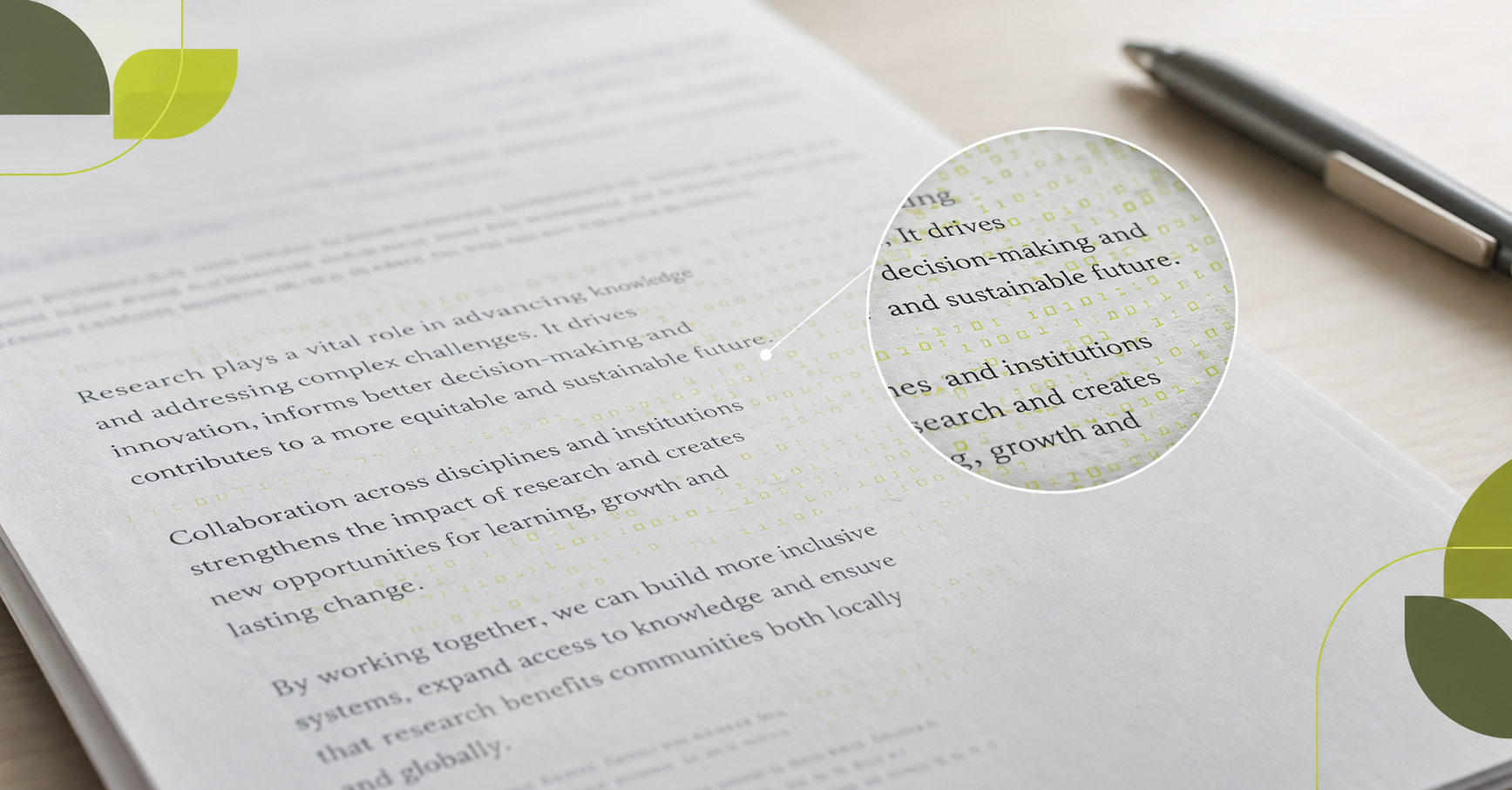
Anthropic has now added watermarking to Claude 5.5 Sonnet – a model that is widely used by academics. (See https://support.claude.com/en/articles/16266773-how-claude-marks-ai-generated-content)
Sonnet is the Claude model line that is often used for routine writing, rewriting, AI-editing and other document work. The new Sonnet 5.5 is explicitly positioned for everyday tasks including document work. Users accessing Claude on the Free and Pro plans will default to this model, and users on the more advanced plans might prefer this model because of its suitability for document work.
This means that most users of Claude will now use models that incorporate watermarking into the processed text. Users can, possibly only for a limited time, revert to an older Sonnet model that does not embed watermarking. Anthropic will retire older models on their own schedule for model-retirement, which could happen any time.
In the earlier article, it was indicated that while academic users might have welcomed a conversational system that indicates when text was generated by AI, this matter was not resolved by Claude. The watermarking indicates that the text has been processed by Claude, without distinguishing between AI writing and AI editing. Human-produced text undergoing AI editing by using the conversational system might also result in watermarking embedded into the text.
Anthropic warns users that the watermark should not be interpreted as an indication of authorship. This warning has also been echoed in several academic and popular publications. However, scholars are still concerned that the embedded watermark could be interpreted by someone (or by not-well-informed parties, or even by malicious players) as an indication that the text was generated or written by AI.
Authors using chatbots for editing their manuscripts, or professional editors using chatbots for editing, should take note of these developments, and should ensure that they do not unknowingly embed watermarking by Claude and Gemini into publications, at a time when the consequences of such watermarking in the reader/user community can hardly be foreseen.
This is not a deficit of Claude and Gemini; the challenging new situation is because providers of conversational systems have to provide persistent and non-removeable watermarking to AI-generated text in order to comply with the EU AI Act – and they currently do not have any means to distinguish in AI-processed text between generated and edited text.
On 5 October, OpenAI announced its own system of watermarking in response to the EU AI Act. This watermarking will initially only be applicable to ‘to eligible ChatGPT and Codex users across all plans in the EU only’. (See https://openai.com/index/eu-text-provenance/)
Public and expert comment on OpenAI’s approach can be expected in the coming days.
Walter Claassen | Acting SARUA Lead: Digital Transformation