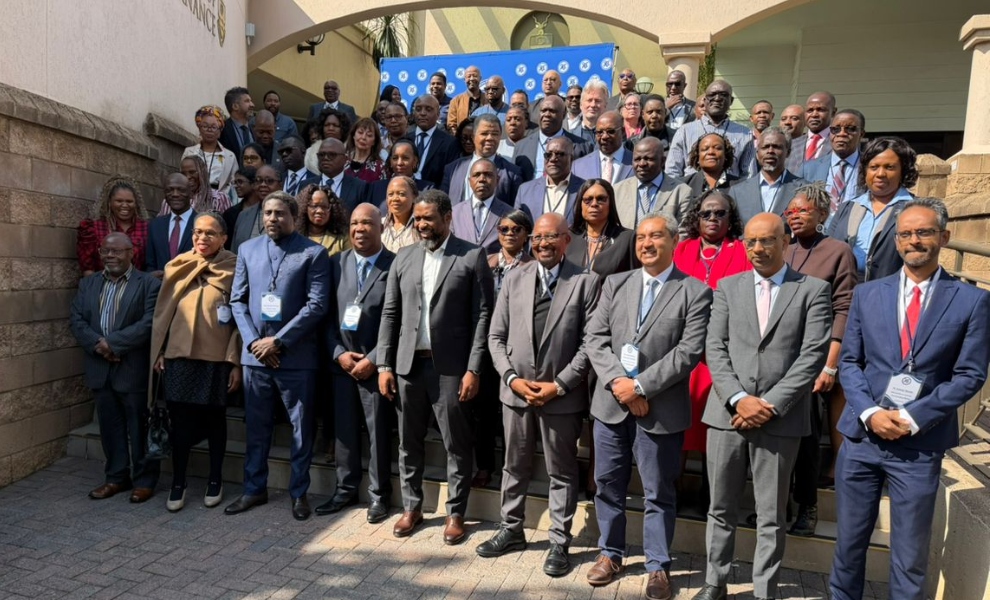
The Southern African Regional Universities Association (SARUA) contributed a strong regional university perspective to the SADC Vice-Chancellors Meeting, highlighting how coordinated strategy, shared institutional capacity and community-engaged action can accelerate higher education transformation across Southern Africa.
Convened by the SADC Secretariat, the meeting brought together vice-chancellors, university executives and regional stakeholders to consider practical pathways for implementing the SADC higher education agenda. Deliberations addressed the SADC Higher Education Strategy, the SADC University of Transformation (SUT), a regional higher education data and information system, research uptake, quality assurance, digital transformation, micro-credentials and flexible learning pathways.
SARUA opening perspective
In his opening address, SARUA Executive Director Prof. Stephen Simukanga reaffirmed SARUA’s commitment to working with the SADC Secretariat, Member States and universities to translate regional priorities into coordinated action.
He situated the meeting within a higher education environment being reshaped by artificial intelligence, digital transformation, changing labour markets, climate pressures and the demand for more flexible lifelong learning. His address emphasised that universities must work beyond institutional boundaries if they are to strengthen future skills, employability, research and innovation, academic mobility and sustainable development across the region.
Prof. Simukanga also underscored the enabling conditions required for regional initiatives to succeed: institutional capacity, credible governance, sustainable financing, quality assurance, reliable data and sustained collaboration with government, industry, communities and development partners.
From concept to implementation for the SADC University of Transformation
Prof. René Pellissier presented the operationalisation roadmap for the SADC University of Transformation. The SUT is envisaged as a networked regional mechanism through which universities and other higher education institutions can combine their strengths instead of creating a conventional stand-alone university.
The presentation explained how the SUT could mobilise existing universities, centres of excellence, centres of specialisation, research capabilities and strategic partnerships across SADC. This collaborative model is intended to support shared academic programmes, research and innovation, flexible learning, mobility and skills development in areas central to regional transformation.
The discussion gave vice-chancellors an opportunity to consider the SUT’s strategic relevance, the contribution their institutions could make and the governance, quality assurance, financing and sustainability arrangements required to move from concept to implementation.
EngageSDGs demonstrates universities in action
Prof. Pellissier also presented progress and the way forward for EngageSDGs, a SARUA-coordinated capacity-building project that strengthens participatory, community-based university engagement with selected Sustainable Development Goals.
The presentation positioned EngageSDGs as a practical example of the engaged university: an institution that works with communities and other stakeholders to co-create knowledge, test locally relevant responses and generate evidence of societal impact. Through its institutional profiling, digital resources, pilot initiatives and capacity-development programme, the project is building capabilities that universities can use to embed participation, SDG alignment and impact into their teaching, research and engagement practices.
Its inclusion in the Vice-Chancellors Meeting connected regional strategy to implementation on the ground. It showed how collaboration across universities can strengthen institutional practice while producing knowledge and solutions that respond to community and regional priorities.
Why the meeting matters
The meeting reinforced the need to treat regional higher education transformation as a connected agenda. Strategy, institutional collaboration, data intelligence, quality assurance, flexible credentials, research uptake and community engagement must support one another if SADC is to build a more responsive and integrated higher education system.
|
SARUA contribution |
Regional value |
| Regional leadership | A shared university voice aligned with the SADC higher education agenda |
| SUT roadmap | A network model that leverages existing institutional strengths across Member States |
| EngageSDGs | A working example of participatory engagement, co-created knowledge and societal impact |
| Ongoing collaboration | A platform for universities to shape implementation with SADC and regional partners |
Looking ahead
SARUA will continue to support dialogue and collaboration among universities and to contribute university expertise to the implementation of the SADC Higher Education Strategy, the further development of the SUT and initiatives that strengthen higher education’s contribution to regional integration, innovation, sustainability and inclusive development.