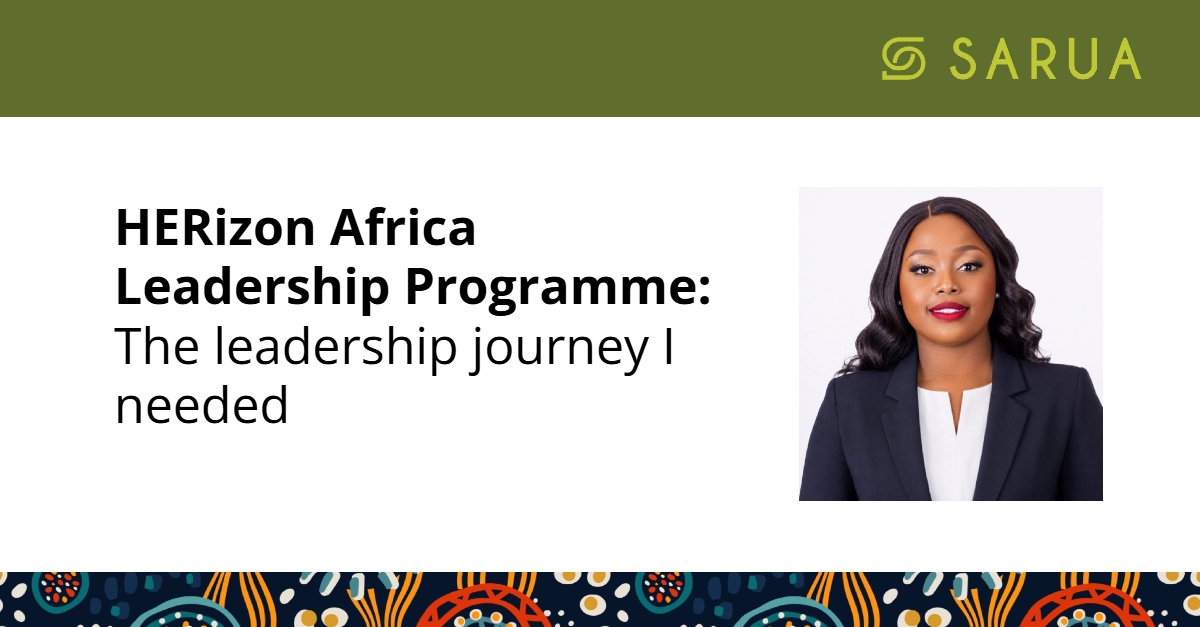
When I joined the HERizon Africa Leadership Programme, I thought I was signing up for a leadership course. What I did not realise was that I was about to embark on a journey that would challenge me, inspire me, affirm me and completely reshape how I view myself as a leader.
From the very first session, I felt energised. Here I was, engaging with remarkable leaders from across Africa, learning from experienced facilitators and discussing the future of higher education on the continent. It was exciting to be part of a space where leadership was not just discussed but lived and experienced.
One of the most powerful aspects of the programme was that it made me pause and reflect. Like many leaders, I am often caught up in meetings, student issues, teaching responsibilities, reports and deadlines. HERizon gave me something I rarely give myself: time to think, time to journal.
And what a journey of self-discovery it became!
One challenge I had always struggled with was my professional identity. As Dean of Student Affairs, a lecturer, and programme leader, I often found myself asking: who am I professionally? The programme helped me realise that leadership is not confined to a title. I began to embrace my identity as a student affairs leader while appreciating how my academic background strengthens my ability to support students and influence institutional change.
The Personal Leadership Development Project became one of my favourite parts of the programme. Looking back at my journey from a quiet and reserved young girl to a leader responsible for student development and wellbeing was both emotional and empowering. It reminded me that leadership is not a destination; it is a continuous process of growth.
There were many moments when I found myself saying, “Aha! That makes so much sense”.
One of those moments, among many, came during discussions on inclusive leadership and the concept of participatory parity. The idea that leadership is about creating conditions where everyone can participate as equals resonated deeply with me. As a Dean of Student Affairs, I realised that my role is not simply to support students but to ensure that every student feels heard, valued and empowered to succeed.
One of my biggest ‘aha’ moments came from Professor Birgit Schreiber’s challenge: “Don’t say you don’t want to be a vice-chancellor”. It stopped me in my tracks. Initially, all I thought was, “I don’t want that stress!”. Then I realised I had been placing limits on my own potential. Why decide in advance how far I can go? HERizon challenged me to focus on growth rather than limitations. Instead of saying, “That’s not for me”, I now ask, “What do I need to do to get there?”. It was a powerful mindset shift that left me inspired to aim higher than ever before.
The programme also expanded my horizons. Sessions on complexity, decolonisation, AI, funding, governance, research and the future of higher education challenged me to think beyond my immediate environment. I began to see higher education not only as a place of learning but as a powerful force for social justice, transformation and sustainable development.
What made the experience even more special were the people. Learning from inspiring leaders such as Professor Birgit, Professor Stephen Simukanga, Professor Romeela Mohee, and many others was a privilege. Equally valuable were the conversations with fellow participants, whose experiences, perspectives and aspirations enriched every session.
Perhaps the greatest gift HERizon gave me was confidence to dream bigger, to aspire for more and to see myself not only as a dean, but as a leader who can contribute meaningfully to higher education in Zambia, Africa, and beyond.
As the programme ends, I do not feel like I am closing a chapter. Instead, I feel like I am opening a new one. I leave with new knowledge, stronger networks, deeper self-awareness and a renewed commitment to lead with courage, empathy, inclusion and purpose.
Would I do it again? Absolutely.
In fact, if someone asked me to describe HERizon in one sentence, I would say:
HERizon did not just teach me about leadership; it helped me see the leader I am becoming.
Ms Abigail Nachilima Chisala
Dean of Student Affairs and Lecturer
Unicaf University, Zambia & Malawi