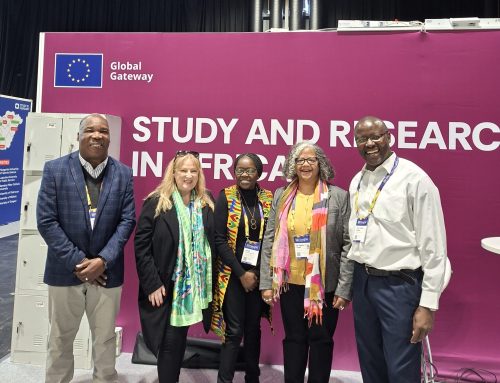
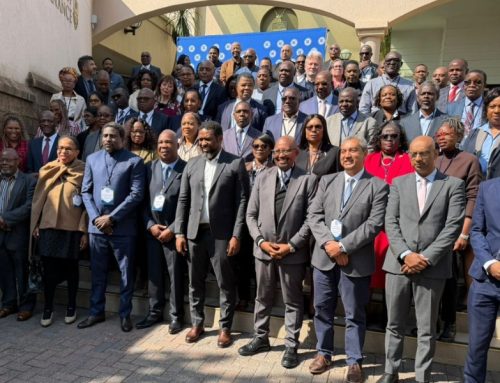
The Southern African Regional Universities Association (SARUA) has become a signatory to the Africa Charter for Transformative Research Collaborations, reinforcing its commitment to research partnerships that place Africa’s priorities at its centre.
The Charter provides an Africa-centred framework for collaboration. It recognises that research is about more than producing publications, collecting data or securing funding. It is also about who shapes the research agenda, whose knowledge is recognised, who leads the work and who ultimately benefits from the outcomes.
Its ten guiding principles encourage research relationships that are respectful, fair and mutually beneficial. They challenge longstanding power imbalances and call for more equitable approaches to leadership, authorship, funding, data ownership and research impact.
By signing the Charter, SARUA commits to working with African Universities, researchers and communities to have a stronger voice and take agency in collaborating to identify the challenges that matter most and generating the knowledge needed to address them. Research is most valuable when it reflects local realities and responds to the priorities of the societies it is intended to serve.
“Research has the greatest impact when African institutions and researchers have the opportunity to shape both the questions we ask and the solutions we develop,” said Prof. Stephen Simukanga, Executive Director of SARUA. “Signing this Charter reflects our commitment to research partnerships built on mutual respect, shared leadership and a recognition that Africa’s knowledge systems have an essential contribution to make. By strengthening equitable collaboration, we can build research capacity across the region and generate knowledge that delivers meaningful benefits for our communities.”
As a regional higher education network, SARUA will use its platform to encourage discussion, share good practice and support practical action across member universities. This includes promoting fair funding models, encouraging responsible research governance and strengthening research capacity. SARUA will also continue to advocate for policies that recognise the value of African scholarship, languages and intellectual traditions.
“As we discovered in our recent SADC wide research project (on Societally Impactful Research), our universities also need to re-think their internal research recognition policies, to adjust them to the metrics that matter in our contexts”, said Prof Birgit Schreiber. The Charter recognises that lasting change depends on more than individual commitment. Its six structural aspirations call for reforms to institutional policies, funding mechanisms, publishing systems, research assessment and global science governance so that equitable collaboration becomes part of everyday practice.
For SARUA, signing the Charter is both a commitment and a starting point. We look forward to working with universities, research networks, researchers, funders, publishers, policymakers and communities to turn its principles into meaningful action.
By strengthening research collaborations across the continent and across our SADC region, we can help create knowledge that is more relevant to Africa’s needs and better equipped to address the complex challenges facing our region.